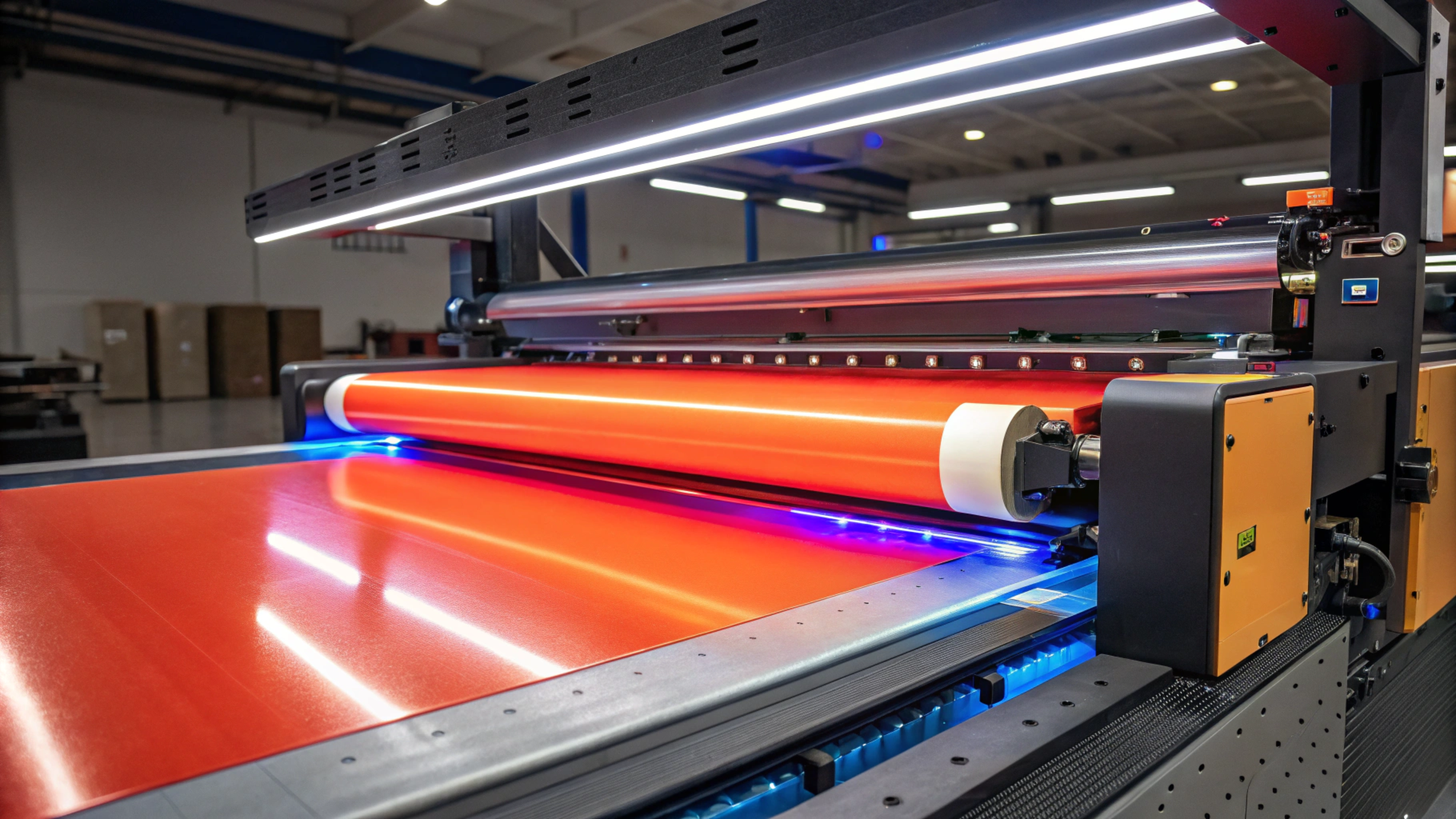
印花橡皮布的技术因素及质量检验方法有哪些?

Printing can be a tricky business. You might spend hours setting up a job, only to find the print quality isn't up to scratch. It's frustrating when the culprit is something as overlooked as the printing blanket. Understanding the technical factors and how to inspect them can save you from costly mistakes.

The key technical factors of printing blankets include thickness, hardness, elasticity, flatness, and chemical resistance; quality inspection methods focus on measuring these parameters to ensure optimal printing performance.

I recall a time when a slight inconsistency in blanket thickness led to blurred images on a major project. It was a hard lesson, but it taught me the importance of thorough quality checks. Let's delve into how you can avoid such pitfalls.

Which Parameters Are the Focus of Quality Inspection Among the Technical Elements of Printing Blankets?

Ensuring top-notch print quality starts with inspecting the right parameters of your printing blanket. But which ones matter most?

The main parameters to focus on are thickness uniformity, hardness, elasticity, flatness, and chemical resistance, as they directly impact the printing blanket's performance and print quality.

Thickness Uniformity

Thickness affects how evenly pressure is applied during printing.

  • 对印刷质量的影响: Uneven thickness can cause irregular ink transfer.
  • Measurement: Use a micrometer to check thickness at multiple points.

硬度

Hardness determines how the blanket interacts with the printing plate and substrate.

  • Shore A Hardness: Measured using a durometer.
  • Optimal Range: Typically between 75-85 Shore A.

弹性

Elasticity influences the blanket's ability to recover its shape.

  • Importance: Affects print consistency over long runs.
  • Test Method: Perform compression set tests.

Flatness

Flatness ensures consistent contact with the substrate.

  • Effect on Printing: Warped blankets can lead to misregistration.
  • Inspection Tool: Use a flatness gauge or straightedge.

耐化学性

Chemical resistance determines how well the blanket withstands inks and cleaning agents.

  • 防止肿胀: Essential for maintaining dimensions.
  • 测试: Expose samples to solvents and check for changes.

Table: Key Parameters and Their Effects

范围对印刷的影响
厚度Ink transfer consistency
硬度Dot gain and image sharpness
弹性Print consistency
FlatnessRegistration accuracy
耐化学性Blanket lifespan

个人经历

Once, I neglected to check the hardness of a new batch of blankets. The result was excessive dot gain, and the prints looked muddy. Since then, hardness testing is a non-negotiable part of my inspection routine.

How to Evaluate the Wear Resistance and Durability of Blankets Through Physical Tests?

Wear and tear are inevitable, but how do you assess a blanket's durability before it's too late?

You can evaluate wear resistance and durability by conducting abrasion tests, tensile strength tests, and flex fatigue tests to simulate the stresses a blanket undergoes during printing.

Abrasion Tests

Abrasion tests show how the blanket handles friction.

  • Method: Use an abrasion tester to rub the blanket surface with a standardized abrasive material.
  • Result: Measure the loss of material after a set number of cycles.

Tensile Strength Tests

These tests assess how much pulling force the blanket can withstand.

  • 程序: Stretch a sample until it breaks using a tensile tester.
  • Importance: Higher tensile strength means better resistance to mechanical stresses.

Flex Fatigue Tests

Flex fatigue tests determine how the blanket performs under repeated bending.

  • Process: Bend the sample back and forth until it shows signs of wear.
  • Application: Reflects the blanket's durability over multiple print runs.

H3: Interpreting Test Results

  • High Abrasion Resistance: Indicates longer lifespan.
  • Strong Tensile Strength: Suggests robustness against tension.
  • Good Flex Fatigue Performance: Means the blanket maintains integrity over time.

我的方法

I always request test reports from suppliers showing these physical test results. It gives me confidence that the blankets will hold up under demanding conditions.

How to Measure the Elastic Recovery Ability of Blankets and How Does It Affect the Printing Quality?

Elastic recovery is crucial for consistent printing. But how do you measure it, and why does it matter?

Measure elastic recovery using compression set tests, which show how well the blanket returns to its original thickness after compression; poor elastic recovery can lead to print defects like ghosting and uneven ink coverage.

Compression Set Tests

These tests evaluate how much a material doesn't recover after being compressed.

  • 程序: Compress a sample under a specific load and temperature for a set time.
  • Calculation: Determine the percentage of thickness not recovered.

Impact on Printing Quality

  • 一致的压力: Good elastic recovery ensures even pressure application.
  • Image Clarity: Reduces issues like ghosting or slurring.
  • Longevity: Blankets maintain performance over longer periods.

H3: Factors Affecting Elastic Recovery

  • Material Composition: The type of rubber and fillers used.
  • Operating Conditions: Temperature and pressure during printing.
  • Age of the Blanket: Elasticity can degrade over time.

个人见解

I once used a blanket with poor elastic recovery on a large print job. Midway through, we started seeing variations in ink coverage. Switching to a higher-quality blanket solved the problem immediately.

What Tools and Methods Should Be Used When Checking the Flatness and Thickness Uniformity of Blankets?

Precision is key in printing. How do you ensure your blanket is flat and uniformly thick?

Use tools like micrometers for thickness measurement and flatness gauges or straightedges for checking flatness; conduct measurements at multiple points to ensure uniformity across the blanket.

Measuring Thickness Uniformity

  • Micrometers: Provide precise thickness measurements.
    • Method: Measure at various points across the blanket.
  • Digital Thickness Gauges: Offer quick readings with digital displays.
    • 优势: Easier to read and record data.

Checking Flatness

  • Flatness Gauges: Specialized tools that detect warping.
    • 用法: Place on the blanket surface and look for gaps.
  • Straightedges: Simple yet effective for a quick check.
    • Technique: Slide across the surface to identify irregularities.

H3: Best Practices

  • Consistent Measurements: Take readings at consistent intervals.
  • 环境条件: Perform checks in a controlled environment.
  • Record Keeping: Document measurements for quality control.

Table: Tools for Inspection

Tool目的
MicrometerMeasure thickness
Digital GaugeQuick thickness readings
Flatness GaugeDetect surface warping
StraightedgeSimple flatness check

我的日常

I make it a habit to check new blankets before installation. Catching any discrepancies early saves time and prevents print quality issues down the line.

What Standardized Test Methods Can Be Used for the Chemical Stability and Solvent Resistance of Blankets?

Chemical exposure is a constant in printing. How do you ensure your blanket can handle it?

Standardized tests like ASTM D471 for rubber property and ISO 1817 for effect of liquids evaluate the chemical stability and solvent resistance of printing blankets.

Forklift moving red and white fabric rolls in a spacious industrial warehouse with organized shelving.

ASTM D471: Rubber Property—Effect of Liquids

  • Objective: Determine how immersion in liquids affects rubber properties.
  • 程序: Soak samples in specific liquids at set temperatures and durations.
  • Measurements: Assess changes in weight, volume, and mechanical properties.

ISO 1817: Rubber, Vulcanized or Thermoplastic—Determination of the Effect of Liquids

  • 目的: Similar to ASTM D471 but follows international standards.
  • Process: Expose rubber samples to liquids and measure property changes.
  • Application: Ensures global consistency in testing.

H3: Interpreting Results

  • Minimal Changes: Indicates good chemical stability.
  • Significant Changes: Suggests the blanket may not withstand certain inks or cleaners.

Importance in Printing

  • Compatibility with Inks: Prevents swelling or degradation.
  • Resistance to Cleaners: Allows for effective cleaning without damage.
  • 延长使用寿命: Chemically stable blankets last longer.

个人经历

After a series of prints with aggressive UV inks, a blanket started deteriorating. Had we conducted proper chemical resistance tests, we could have avoided using an unsuitable blanket.

结论

Understanding the technical factors and quality inspection methods of printing blankets is essential for anyone serious about achieving high-quality prints. By focusing on parameters like thickness, hardness, elasticity, flatness, and chemical resistance, you can select the right blankets and maintain them properly. Regular testing and inspections not only improve print results but also extend the lifespan of your equipment. I've learned that investing time in these details pays off in better performance and fewer headaches in the long run.

来自同芬团队的问候

在同奋,我们的博客内容是我们的工程和销售团队之间的合作成果。这种独特的合作关系确保每篇文章都提供技术准确性和市场洞察力,为读者提供实用的、专家驱动的信息。敬请关注更多有价值的内容,让您在行业中保持领先!